 Pramaan

What we're reading, testing and building.
Research on how children learn, games to play at home, and notes from the problems our teams take on. Written by our research team, for parents and teachers.
 School at 9, not 8: what one extra hour did for 13-year-oldsA new randomised trial moved two classes to a later start. They slept 26 minutes more a night and did better on a test of self-control.
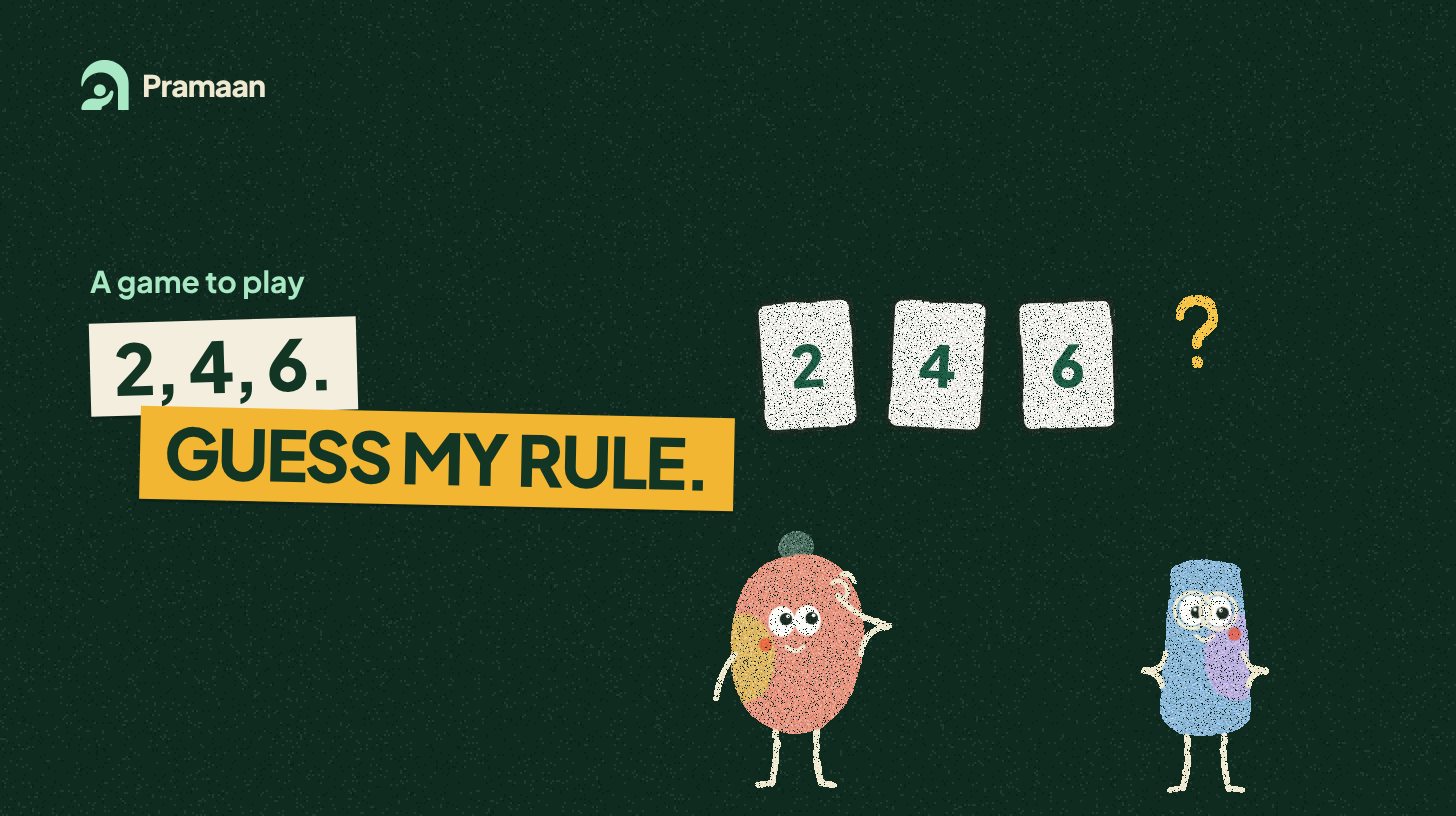 2, 4, 6: the dinner game that teaches children to test their ideasMost clever adults fail this number puzzle. Why they fail, and the one move that fixes it, is worth teaching a child early.
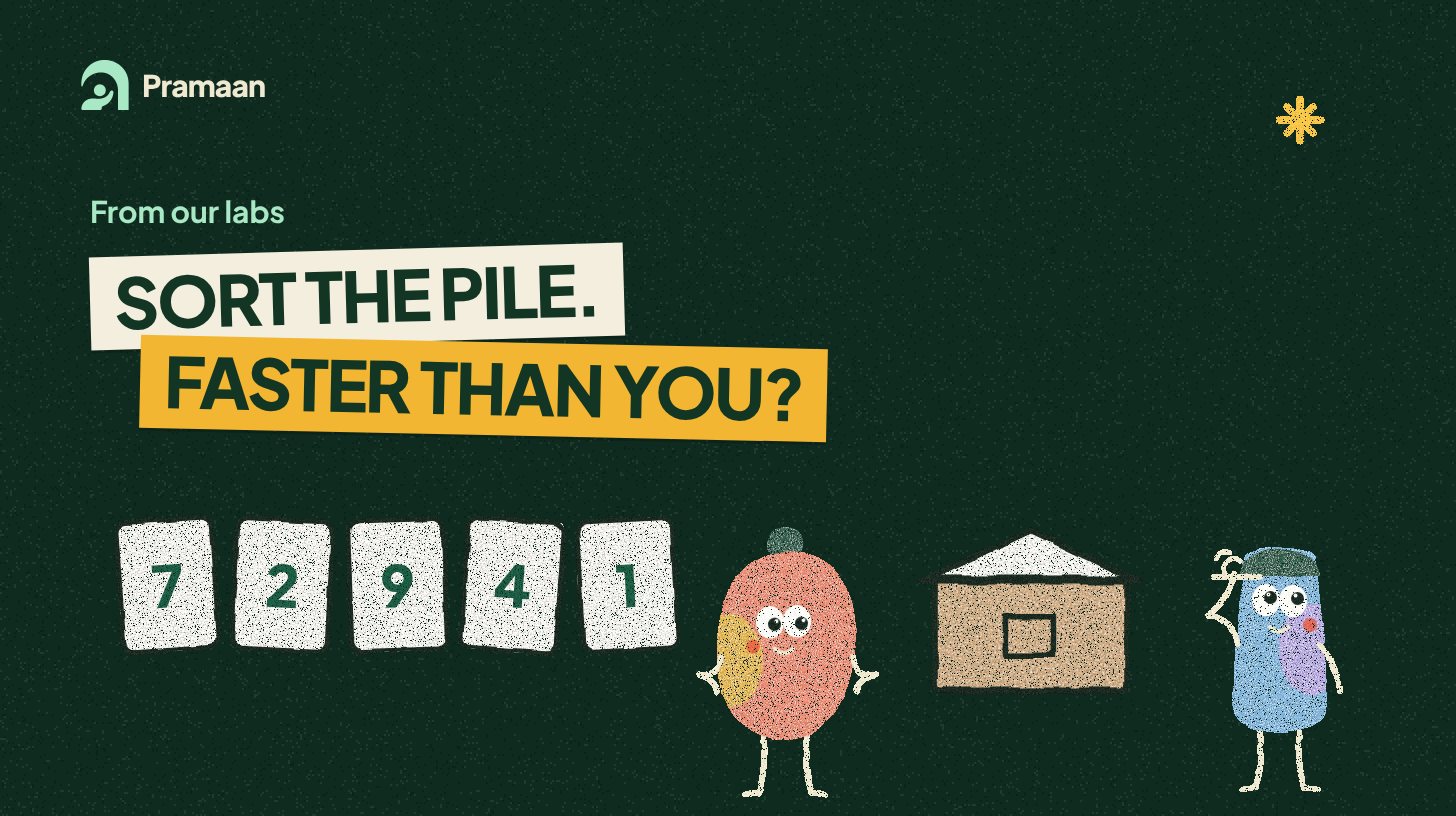 Can a set of rules sort faster than you?Eight cards, two rules, 28 checks or 17. Inside one of our lab problems, plus a card game that shows why some rules work smarter.
 Does reading for fun change a child's brain?Children who read for pleasure from young scored higher on thinking tests and slept a little more. What the study shows, and what it cannot.
 Breakfast for 15 lakh more children. Does it help them learn?Tamil Nadu now serves breakfast up to Class 8. What the research says about a morning meal and attention, and where it is still unsure.
 Real or made up? A dinner game that trains a fake-news radarA trial with 13,500 teenagers in Bihar found that a few classes made them better at telling true stories from false ones. Here is a family game built on it.
 How would you cool a classroom with no AC?Heat shut more schools than any other climate hazard in 2024. The physics, maths and money inside one of our lab problems, plus a version to try at home.
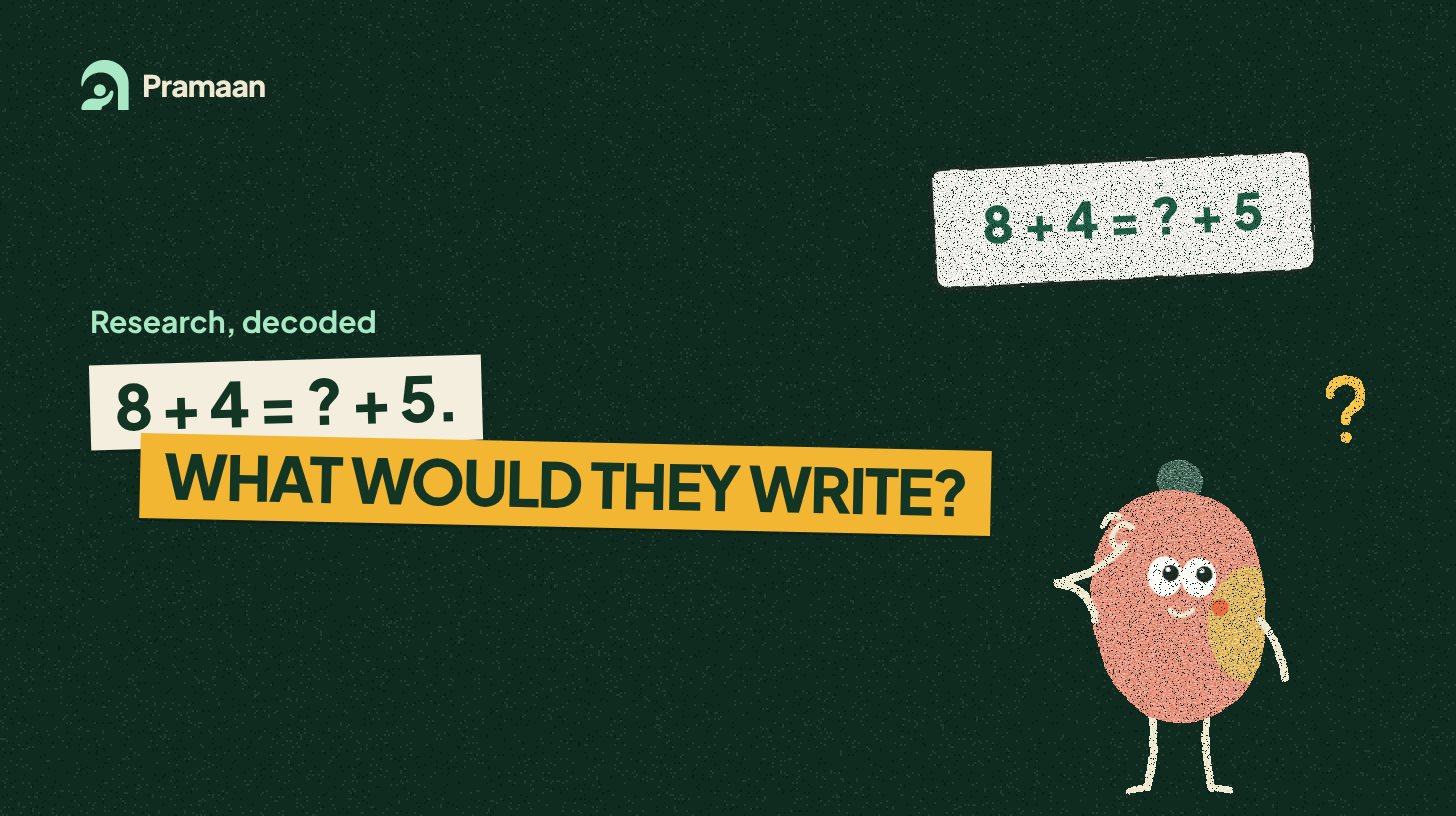 8 + 4 = ? + 5. What would your child write?Many children read the equals sign as "the answer goes here". Two studies show how long that idea lasts, and why it matters when algebra arrives.
 A phone at 12: what a study of 10,000 children foundA large new study links owning a smartphone at 12 with poorer sleep, more weight gain and more low mood. Here is what it can and can't tell you.
 The blank-page game: why trying to remember beats rereadingA three-minute family game built on one of the best-tested findings in learning science, and what the research does and doesn't show.
 Same nine votes, three different winners. How?A problem from our labs about running for office, the maths of counting votes hiding inside it, and a family election you can hold tonight.
 "You're so smart!" What the praise research really foundA famous 1990s experiment, a 12,000-student trial and two big reviews: what they say about how to praise your child, and what they don't.
 Is your child losing their knack for spotting patterns?A new study followed the same children from age 7 to 14. Their hidden pattern-learning slowed down as their thinking grew up. Here is what that means at home.
 Copy my build: a kitchen-table game that trains spatial thinkingTwo players, a wall and six household objects. The game behind it, the research on spatial skills, and how to make it harder each week.
 How much food does a city of one crore eat in a day?A problem from our labs, the estimation trick hiding inside it, and a version to try at the dinner table tonight.
 Pen or keyboard: which helps your child learn more?Brain scans, a letter-learning study and a famous note-taking replication point in different directions. Here is what each one actually found.
 Two basic skills that predict whether a child stays in schoolA new study followed thousands of adolescents in Bihar and Uttar Pradesh. Those who couldn't read a Class 2 story or do a division were far likelier to leave.
 Why 20 Questions is harder for children than it looksSixteen objects, four questions. A dinner-table game, the study behind it, and the maths that makes it work.
 What would a sport look like on the Moon?A problem from our labs, the physics hiding inside it, and a version you can play at home tonight.