 Pramaan

Does reading for fun change a child's brain?
Children who read for pleasure from young scored higher on thinking tests and slept a little more. What the study shows, and what it cannot.
Picture two ten-year-olds on a Sunday afternoon. One is curled up with a comic or a novel nobody assigned. The other has never quite taken to books outside school. Does that difference show up anywhere that matters?
A team from Fudan University in Shanghai and the universities of Cambridge and Warwick went looking for an answer in one of the largest studies of children's brains ever run. Their findings are encouraging for parents, and they come with limits that are worth knowing before anyone turns reading into another chore.
Who did the study, and how
The paper was led by Yun-Jun Sun, a neuroscientist at Fudan University, and Barbara Sahakian, a professor of clinical neuropsychology at the University of Cambridge, with Jianfeng Feng, a computational neuroscientist at Fudan and the University of Warwick. It was published in Psychological Medicine in 2023.
They used data from the ABCD study, which follows more than ten thousand children across 21 sites in the United States. The team had full reading information for 10,243 children, who were 9 to 11 years old when they were first assessed and 11 to 13 two years later.
Parents answered two simple questions: for how many years has your child read for pleasure, and about how many hours a week do they read for pleasure now? Reading for pleasure here means reading the child chooses, not homework.
How many children were readers
The answers split the children almost down the middle.
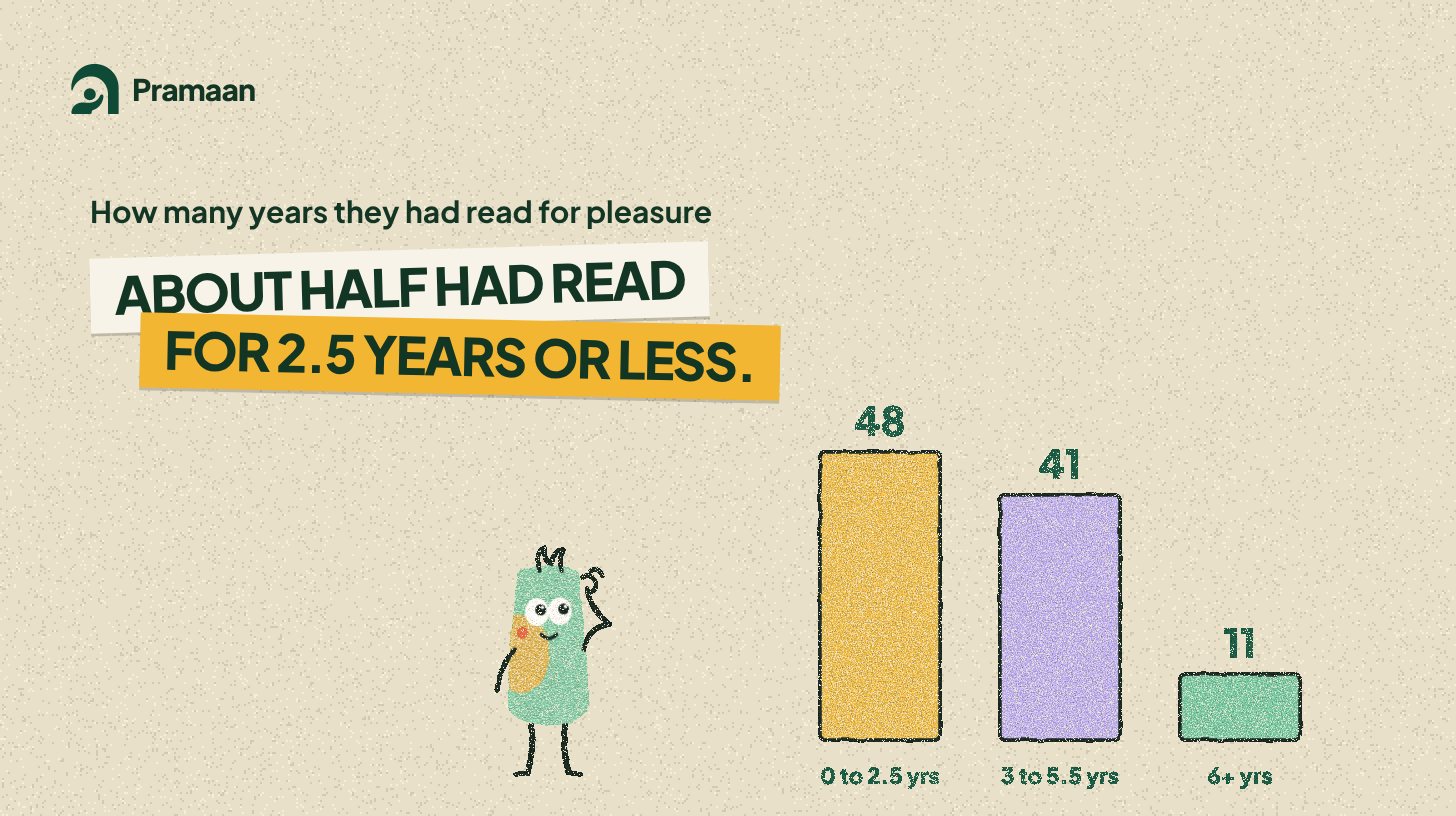
About 48 in 100 children had read for pleasure for two and a half years or less. Around 41 in 100 had read for three to five and a half years, and 11 in 100 for six years or more.
What the readers had in common
Children who had been reading for pleasure for longer scored higher on a battery of thinking tests. The strongest link was with what psychologists call crystallised ability: vocabulary, reading and the knowledge a child has built up. They also did better at school, according to parents' reports.
The early readers showed fewer attention problems and fewer behaviour problems such as aggression and rule-breaking. They spent less time on screens on weekdays and weekends, and slept a little longer.
Brain scans showed slightly larger total brain volume and cortical surface area, with differences in regions linked to language, memory and attention. Two years later, the children who had read for longer still did better on the crystallised tests.
The team took family income and parents' education into account, which matters because children from better-off homes tend to have more books. The links held after that adjustment, and in both lower and higher income groups.
Jianfeng Feng put the message for families simply: "We encourage parents to do their best to awaken the joy of reading in their children at an early age."
The surprise: more was not always better
The researchers also looked at how many hours a week children read now. Thinking scores rose with reading time up to about 12 hours a week, and beyond that they dipped slightly.
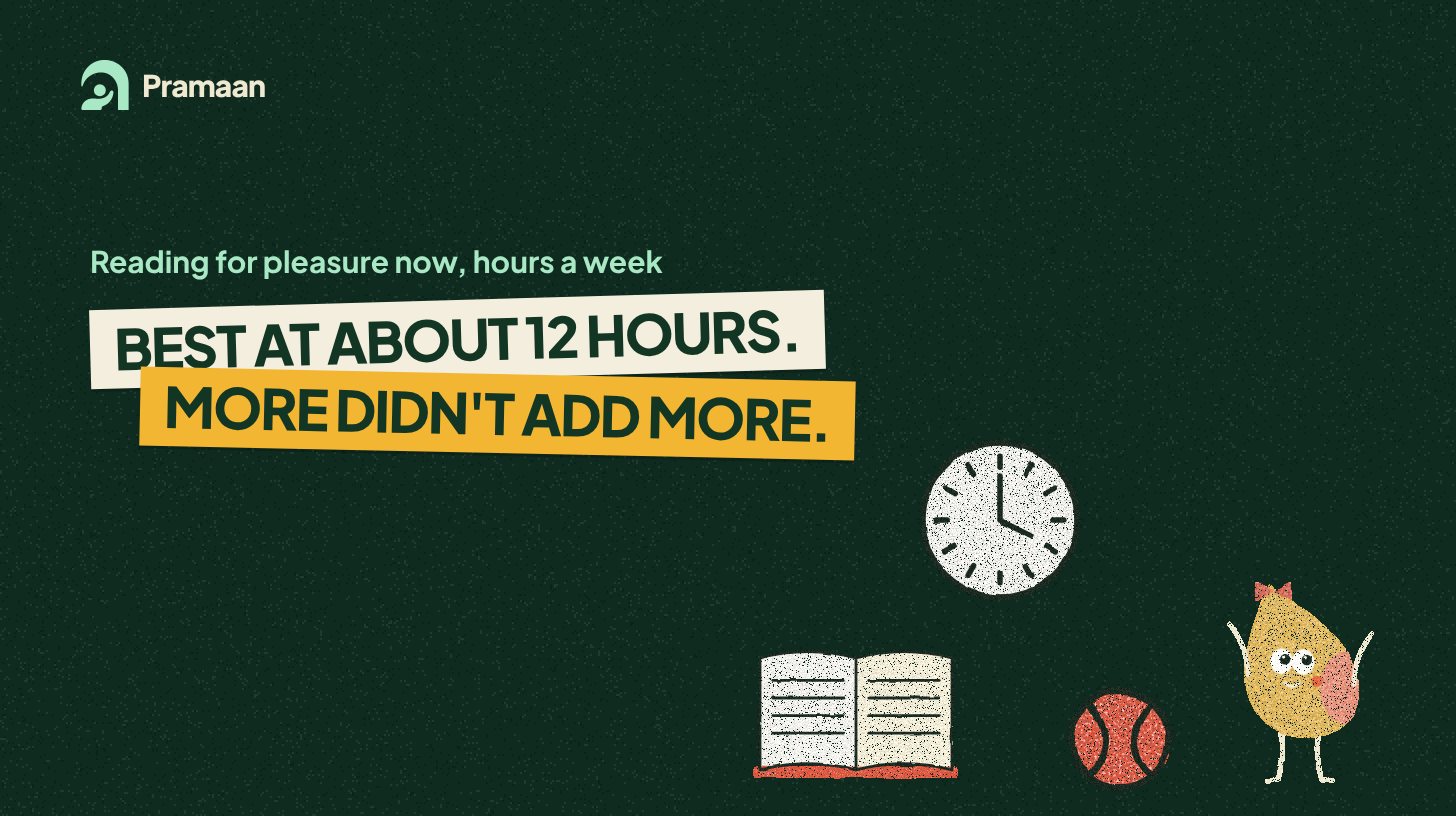
Twelve hours a week is a little under two hours a day. The authors suggest that children reading far more than that may be sitting still for long stretches and missing other things that help a growing brain, such as play, sport and time with friends. That is an explanation they offer, not something the study tested.
What this study cannot tell us
This is an observational study. It found that reading for pleasure goes together with better scores, and it cannot prove that reading caused them. Children who think quickly may simply enjoy books more, and homes where children read may differ in many other ways that no adjustment captures. The authors did run extra genetic analyses that point in the same direction, and they describe these carefully as hints rather than firm evidence.
The effects are also small. The correlations ranged from about 0.03 for brain measures to about 0.33 for the strongest thinking scores. Across ten thousand children, small differences are real. For one child, they are not a forecast.
The reading data came from parents, who may remember generously. And every child in the study lived in the United States. We would like to see the same questions asked of children in India, where many read in two or three languages and comics like Tinkle and Amar Chitra Katha are a rite of passage.
What we take from it at home
The study asked about reading children choose, not reading they are told to do. That points to a simple rule for parents: protect the choosing.
If your child would rather read a comic than a classic, let them. If they read the same book four times, that still counts. Ask about it the way you would ask about a film, not the way a teacher checks a chapter.
And keep an eye on balance. A child who reads two hours a day and also plays outside is not a worry. A child who has swapped everything else for any single activity, books included, might need a nudge outdoors.
Sources
- Sun Y.-J., Sahakian B. J., Langley C. et al., Feng J., Fudan University, University of Cambridge and University of Warwick, Psychological Medicine, 2023 (10,243 children in the ABCD study, aged 9 to 11 and 11 to 13)
- University of Cambridge, Reading for pleasure early in childhood linked to better cognitive performance and mental wellbeing, June 2023